
CRITICAL REFLECTIONS
PEOPLE,PLACES & BELONGING
When I came to London, I envisioned a fresh start for my paintings and practice. I knew there was much I wanted to improve in my work, and I felt the need for a mentor to help me understand myself and my art better. For a long time, I explored various themes and ideas in my paintings, but often found myself feeling lost and confused once a piece was finished.
My first one-on-one session with Geraint Evans became a turning point. He encouraged me to look back at my past work and documentations to figure out what I was truly searching for in my art. Following his advice, I revisited my old photographs, images I had clicked intuitively, capturing moments and began questioning their underlying purpose.
Through this process, I realized two central themes consistently emerged in my work: people and places. With further reflection, it became clear that my art is, at its core, a search for belonging and an exploration of my identity in relation to the spaces I inhabit. This discovery has given me a renewed sense of direction and purpose in my practice.
A NEW PLACE

Moving to London marked a significant shift for me, both personally and professionally. One question echoed in my mind: What does this place mean to me? Do I belong here? This introspection began as I documented my daily journey from my apartment to college in videos and images, capturing people in conversation, intriguing objects, and moments that evoked memories.
This exploration often leads me to question further; 'How does a place define those who live upon it? And how do they, in turn, reshape it? These questions guided my works and to document not just what I see, but what is felt and experienced in these urban spaces.
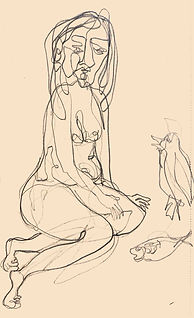

Translation of sketchbook writing:
we left and they left me here,
A city full of strangers.
My mother, caressing me with her dry hands,
They still comfort me.
While dad wished me luck, his voice crackling in between,
It wasnt my first time being alone,
But still tears in my eyes?
And even though i was so exciting to be on this new land,
it felt that there was no home to go back to?
The strange loneliness of a new country gradually gave way to comfort found in small, daily rituals. Observing and capturing these moments helped me feel grounded and connected, even in unfamiliar surroundings. For me, understanding a place and finding belonging starts with understanding its people. They are the first connection we make, defining the essence of any environment.
VISITING GALLERIES
Throughout unit 1, I visited many galleries, but one artwork that deeply resonated with me was ‘The girl in a red blouse’ by Sosa Joseph at David Zwirner. It spoke about her childhood memories in the village, emotions that mirrored my own state of mind at the time. This inspired my first piece titled What’s Missing?, which delved into the memories of my previous home and marked the beginning of my journey here.


Sosa Joseph , 'The girl in a red blouse',Oil on canvas, 2024
Sosa Joseph , 'Snakeheads, Catfish and Aisha',Oil on canvas, 2024

Viktor Boullet , 'I have Five friends',Oil on linen canvas, 2021
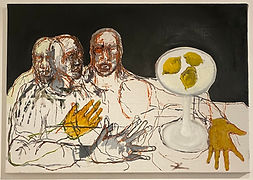
Viktor Boullet , 'Conflict',Oil on jute, 2024

Shortly after, I attended an exhibition by Viktor Boullet at The Artists’ Room in London. His use of thick oil paints and his unique approach to portraiture fascinated me. There was a sense of playfulness and boldness in his technique that felt both freeing and addictive. Inspired by his work, I began a series of portraits exploring expressions of self within this new city. Some were based on imagination, others on documented images, but all were influenced by my evolving understanding of identity and place.
These experiences not only shaped my practice but also became a way for me to process and express my emotions, allowing me to create meaningful connections between my art and my life in this new environment.
Viktor Boullet , 'Dont Speak at me',Oil on jute, 2024
A DIFFERENT PERSPECTIVE
Coming from a different country, I’ve found myself viewing my surroundings through a unique lens and seeking connections in everyday interactions.I explore the relationship between people and the land they occupy, the stories they have, the marks they leave behind.

A talk by Yu Chen Wang was especially eye-opening, as it explored the perspective of being an immigrant and being perceived as an outsider in a new land.It questioned ‘Who does land belong to?’articulating feelings I was beginning to experience in a new place. This perspective was new to me, but it has since become an integral part of how I navigate my life and practice here.
Bell Hooks’ Belonging: The Culture of a Place further shaped my understanding of identity, home, and displacement. Reflecting on her experiences of land and family mirrored my own journey of finding a sense of self and belonging in a foreign space, grounding these ideas in both my life and artistic practice.
Yu Chen Wang , 'How we are where we are',installation,2024

Engaging in discussions with peers and mentors has been invaluable in shaping my artistic perspective where I was introduced to the works of artists like Egon Schiele and Nicole Eisenman, both of whom have become enduring sources of inspiration. Eisenmans work ‘Another Green world (2015)’ and ‘Coping(2008)’ were inspired by a tradition of storytellings and the place she lived in when creating those works, navigating the intersection of mainstream and countercultural influences.
Another artist who has left a lasting impression is Francis Newton Souza. His works like Degenerates(1957) express defiance and impatience with convention and the banality of everyday life with a fearless use of lines, dynamic strokes, and unapologetic boldness have often found their way into my work.

F.N Souza, 'Degenerates',Oil on canvas, 1957

F.N Souza, 'Foreman',Oil on canvas, 1961


Nichole Eisenman , 'Another Green world',Oil on canvas, 2015
Nichole Eisenman , 'Coping',Oil on canvas, 2008
LINES

Throughout this course, I’ve been deeply engaged in exploring how I represent lines, which have been very dominant in my works. While books like ‘Line’ by Tim ingold offered valuable insights and opened up various possibilities, I often found myself unconvinced by the direction my research was taking. The answers I was seeking felt incomplete.
The exhibition Through Line at The City Art Centre in Edinburgh, deepened my understanding as I discovered new approaches to incorporating lines. I believe line a way of expressing connections, relationships, and emotions. For me they are not just visual elements; they carry meaning and emotion, acting as threads that weave through my narrative.


Susan Mowatt , 'Tangle', 33 mtr woven strip, City Art Centre,Edinburgh.
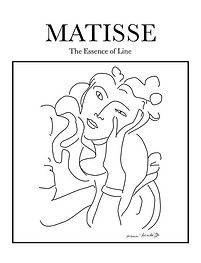
Matisse’s insight, “One must always search for the desire of the line, where it wishes to enter or where to die away” (The Essence of Line, 1908), inspired me to explore etching and linocut. The intricate process of etching, from preparing plates to inking became a deeply engaging and integral medium, allowing me to explore the expressive potential of lines on a deeper level.
"I think it goes back to when I was a kid, and I would doodle as I listened to whatever the lesson was in school. It helped me focus. I think it's been proven now scientifically that that is something that can help certain people process language, especially dyslexic people like myself. I doodle all the time, even while we're talking now."
(Nichole Eisenmann,2024)

I believe this quote perfectly encapsulates my nature and approach to work.
Doodling has always been an integral part of me,something I instinctively do to stay focused and reflect on my work. These constant, unfiltered sketches have shaped my practice, becoming both a creative outlet and a research method.
A major reflection on my practice has been understanding where my fascination with observing people began. Often, I see myself as an outsider in my context, quietly observing without engaging. This realisation emerged during Gavin Edmonds reading group, where we explored Sigmund Freud’s Memory of a Childhood. It highlighted how childhood experiences weave into our creative processes, prompting me to reflect on my introverted nature as a child. Avoiding engagement, I would keenly observe my surroundings, noticing people’s behaviours, reactions, and emotions, an instinct I still carry today.
This tendency also shaped my way of creating, from single line sketches born out of quick observations to scribbled thoughts in my sketchbook, where writing faster felt like a way to hide my emotions.

A small writing:
I want to write so much
But i dont want anyone to read this
Maybe i write faster, so it gets confusing?
But i still want to express; so its not the people,is it?
The people who i actually want to hide it from,are people who have been close.
The strong i have always had to be,
Are all vulnerable with these pencil scraps,
Stop writing.


Expressing these thoughts has become a reflective part of my practice, allowing me to confront subconscious emotions. Observing and documenting my surroundings have become central to my process, shaping my subjects and compositions while connecting to personal memories.
Currently, I’m experimenting with combining mediums, projecting video documentation onto paintings which i aim to work with in Unit 2 and integrating techniques like etching and linocuts to deepen the interplay between observation, memory, and expression.
