
Laking and calcinating experiments : Jamun and Kokum
Indian Berry or 'Jamun; is a purple, oblong fruit native to India, including Goa, known for its unique sweet and slightly astringent taste and grows on the Syzygium cumini tree.
Procedure for experiment with dried indian Berries ( Jamun )
-
100 gm berries/ jamun
-
300 ml water
-
Put it in boiling water for around 15 mins
-
Added alum: 1 3/4 tbsp
-
simmered it for around 20 mins
-
Seperation of pigment and content successful: water turned orange
-
removed from heat and put contents in a seive
-
in the strained extract, i added 1 tbsp Potash
-
The extract foamed up and left untouched for 2 days.
-
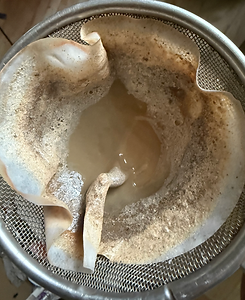
added extract to filter paper and left to drain for 1 and half days.
-
Pigment colour- greyish brown,slight yellow strains
-
filter paper left for drying for 2 days, then pigment grounded into powder.

jamun or indian berry

boiling in water

contents straining in filter paper

colour seperation on adding Alum

adding potash

Pigment ready to grind
filtered wet pigment

Observations and notes on experiment
Procedure for experiment with kokum fruit
Kokum is a small, deep magenta fruit native to Goa, celebrated for its tangy flavor and medicinal benefits. It grows on the Garcinia indica tree and is an integral part of Goan culture, often dried and stored for culinary use and as a staple in everyday household life.
The procedure to work with this was quite similiar to working with the previous one, using 10-20gm of kokum,300 ml water. One thing which was significantly different was that this fruit instantly oozed out its colour in water. It also reacted less on adding Potash after simmering it, but the pigment created was a deep magenta colour.

dried kokum fruit

straining process

boiling in water with alum

magenta colour of extract

adding potash


filtered pigment
content straining in filter paper

Observations and notes on experiment